
Kinesiology Taping
Kinesiology Taping
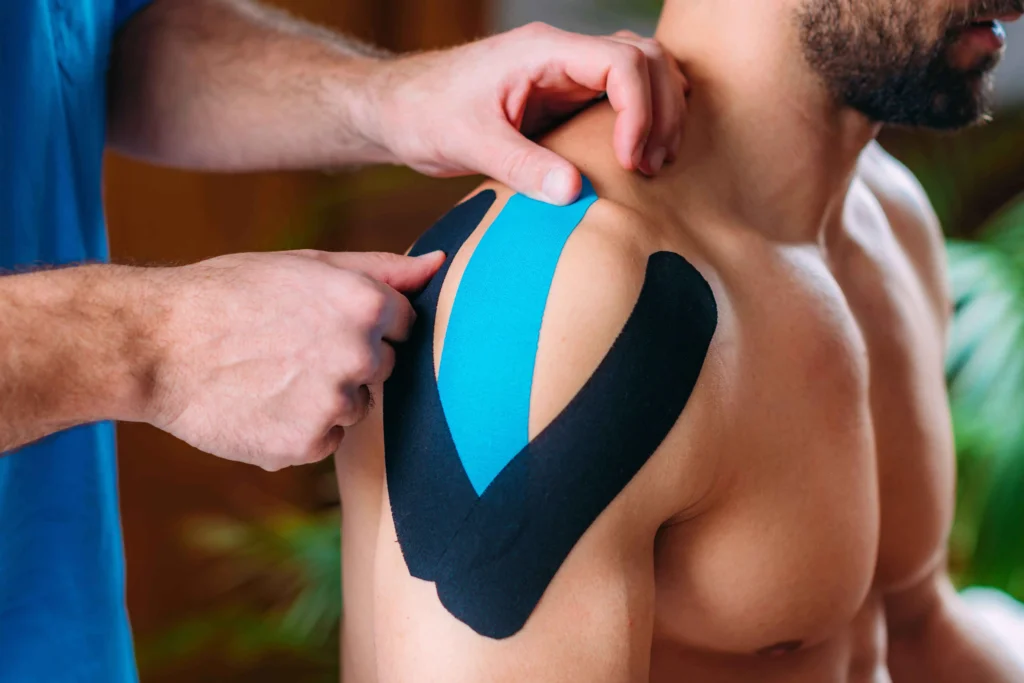
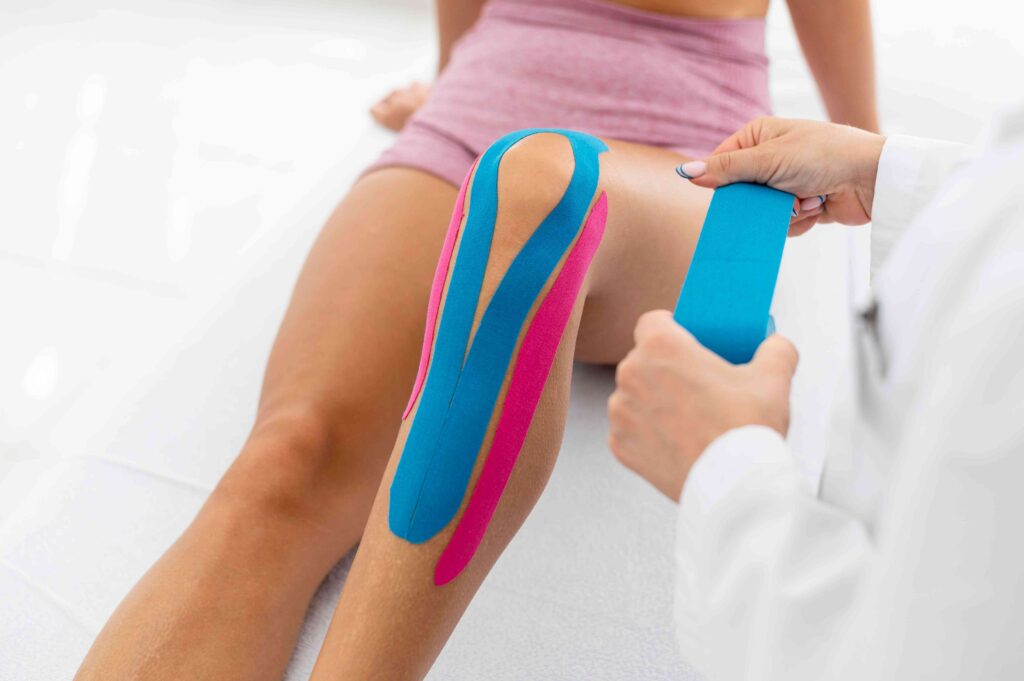
Kinesiology taping uses a unique elastic adhesive tape — designed to mimic the thickness and elasticity of human skin — to provide continuous therapeutic input between clinic sessions. Unlike rigid sports strapping, KT tape allows full range of motion while subtly altering the sensory environment around the joint or muscle, helping reduce pain, improve proprioception, and support weakened structures.
CONDITIONS TREATED
- Patellofemoral Pain
- Shoulder Instability
- Shin Splints
- Achilles Tendinopathy
- Whiplash
- Lymphoedema
- Postural Correction
- Ankle Instability
TECHNIQUES & PROCESS
1. Muscle Facilitation
Applied from origin to insertion to activate and support underactive muscles.
2. Muscle Inhibition
Applied from insertion to origin with minimal tension to calm overactive, hypertonic muscles
3. Fascia Correction
Fan-shaped strips with varying tension to address fascial restrictions and improve tissue glide.
4. Space Correction / Decompression
Creates a lift in the skin to reduce pressure on pain receptors and improve lymphatic drainage
5. Joint Support
High-tension application to provide structural support and guide correct joint alignment.
KEY BENEFITS
FREQUENTLY ASKED QUESTIONS
How long does KT tape stay on?
When applied correctly to clean, dry skin, kinesiology tape typically lasts 3–5 days. It is water-resistant, so you can shower and swim while wearing it. To maximise adhesion, avoid applying lotions or oils to the skin before taping, and pat the tape dry rather than rubbing after getting wet.
Can I apply KT tape myself at home?
While KT tape is available over the counter, the application technique matters enormously — incorrect tension, direction, or positioning can be ineffective or even counterproductive. We recommend having your first applications performed by your physiotherapist, who will teach you the correct technique so you can eventually reapply it yourself between sessions.
Does KT taping actually work?
The evidence base continues to grow. Clinical research supports its effectiveness for pain reduction, oedema management, and proprioceptive improvement in conditions such as patellofemoral pain, shoulder impingement, and lymphoedema. It is most effective as part of a comprehensive treatment plan rather than a standalone intervention.
Will KT tape affect my sporting performance?
Unlike rigid sports strapping, kinesiology tape allows full, unrestricted range of motion. Many athletes find it enhances performance by reducing pain, improving muscle activation, and providing proprioceptive feedback without mechanical restriction. It is widely used at elite level across rugby, athletics, swimming, tennis, and football.
Is KT tape suitable for sensitive skin?
Most kinesiology tapes use a hypoallergenic, latex-free acrylic adhesive suitable for sensitive skin. However, some individuals with very reactive skin may experience mild redness or irritation. If you have a known skin sensitivity, inform your physiotherapist, who can perform a patch test or choose an alternative brand formulated for highly sensitive skin.