Cupping Therapy
Cupping Therapy
Cupping therapy uses negative pressure — applied via silicone, plastic, or glass cups — to lift the skin and underlying fascia, dramatically increasing blood flow and promoting the release of fascial adhesions. Unlike massage which applies compressive force, cupping decompresses the tissue layers, creating space for improved fluid exchange, toxin clearance, and cellular repair. Modern physiotherapists integrate cupping with evidence-based protocols for highly targeted musculoskeletal interventions.

CONDITIONS TREATED
- Upper back tension
- IT band syndrome
- Plantar fasciitis
- Rotator cuff tightness
- Lower back pain
- Scar tissue
- Sports recovery
TECHNIQUES & PROCESS
1. Static Cupping
Cups placed on specific points and left for 5–15 minutes to decompress tissue and promote localised healing.
2. Dynamic / Gliding Cupping
Cups moved across oiled skin to provide a deep myofascial release effect across broad muscle groups.
3. Flash Cupping
Rapid application and removal to stimulate circulation without leaving marks — ideal for sensitive patients.
KEY BENEFITS
FREQUENTLY ASKED QUESTIONS
Will cupping leave marks on my skin?
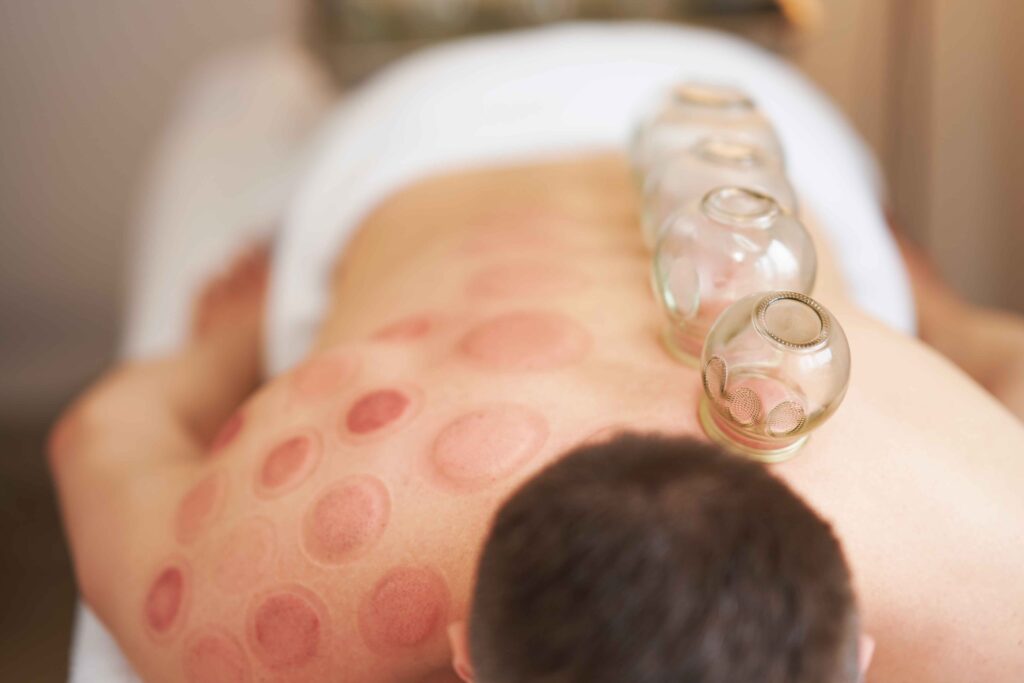
Static cupping often leaves circular discolouration ranging from pink to dark purple that can last 3–7 days. Despite resembling bruises, these are not caused by trauma but by suction drawing stagnant blood to the surface. They are generally painless. If you have upcoming events and prefer to avoid marks, let your therapist know — flash or gliding cupping can achieve similar benefits with minimal discolouration.
Is cupping painful?
Most patients describe cupping as an unusual but pleasant sensation — a pulling and lifting feeling rather than pain. In tight or restricted areas there may be some initial discomfort as suction takes effect, but this typically fades within the first minute. Your therapist controls the level of suction and will always adapt to your comfort.
How does cupping differ from massage?
Massage applies compressive, downward pressure working on superficial layers. Cupping works in the opposite direction — using negative pressure to lift and decompress tissue, accessing deeper fascial layers that hands alone often cannot reach. This makes cupping particularly effective for stubborn adhesions and chronic tension patterns.
Who should avoid cupping?
Cupping is not suitable for patients with blood clotting disorders, those on blood-thinning medication, active skin conditions, during pregnancy, or over areas of acute inflammation, varicose veins, or bony prominences. Your physiotherapist will conduct thorough screening before your first session.
How many sessions will I need?
Many patients notice significant improvement after just one or two sessions. For chronic conditions with deep fascial involvement, a course of 4–8 sessions spaced 1–2 weeks apart is typically recommended. Cupping is often incorporated into a broader physiotherapy plan rather than used as a standalone treatment.