Acupuncture
Acupuncture
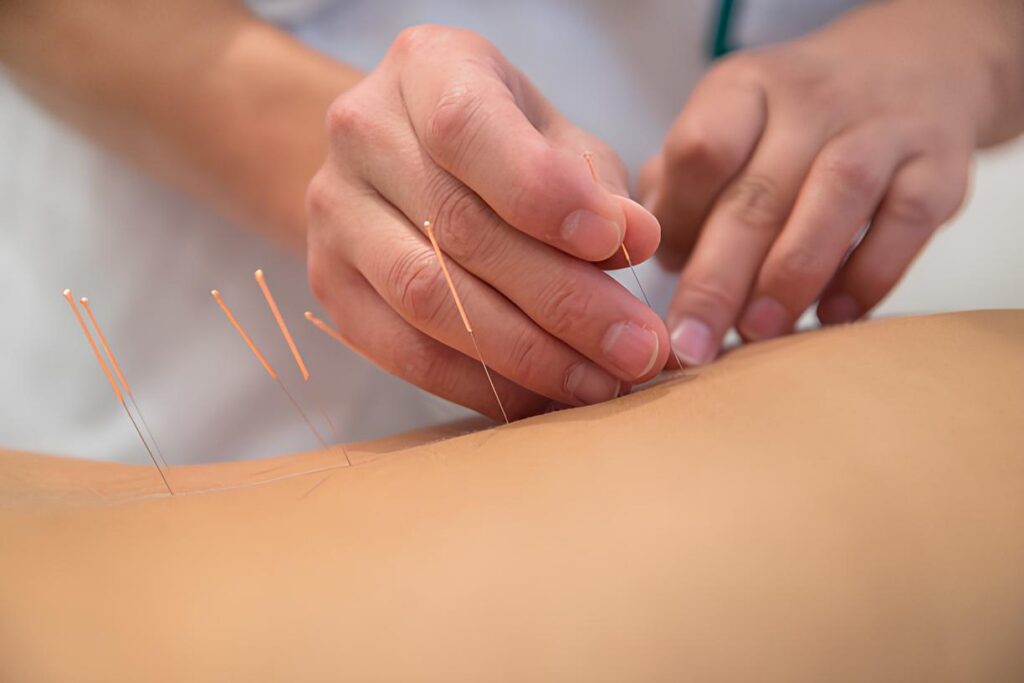
Our physiotherapists are trained in Western Medical Acupuncture — a clinical adaptation of traditional Chinese acupuncture, informed by modern anatomy, physiology, and neuroscience. Fine, sterile, single-use needles are inserted at specific anatomical points to stimulate nerve fibres, trigger endorphin and serotonin release, and modulate pain signals at spinal cord level — delivering systemic analgesia without pharmacological intervention.

CONDITIONS TREATED
- Chronic low back pain
- Neck pain
- Migraines and headaches
- Osteoarthritis
- Sciatica
- Tennis/golf elbow
- Menstrual pain
- Stress
TECHNIQUES & PROCESS
1. Gate Control
Needle stimulation activates large-diameter nerve fibres that 'close the gate' on pain signals travelling to the brain.
2. Endorphin Release
Stimulation triggers the brain to release beta-endorphins, the body's natural opioid pain killers.
3. DNIC
Diffuse Noxious Inhibitory Controls — widespread pain inhibition activated by localised needle stimulation.
4. Anti-inflammatory Effect
Local needling promotes vasodilation and modulates pro-inflammatory cytokines in damaged tissue.
KEY BENEFITS
FREQUENTLY ASKED QUESTIONS
Does acupuncture hurt?
Acupuncture needles are extremely fine — far thinner than a hypodermic injection needle — so most patients feel little to no pain on insertion. You may experience a brief, dull ache, tingling, or heaviness around the needle site, known as ‘de qi.’ This is considered a positive therapeutic response and typically fades within seconds. Many patients find the experience deeply relaxing.
How many sessions will I need?
Acute conditions may respond within 3–6 sessions. Chronic or long-standing pain conditions typically require 6–10 sessions to achieve sustained benefit. The effects are cumulative — each session builds on the last. Many patients opt for monthly maintenance sessions once their condition is well managed.
What is the difference between acupuncture and dry needling?
Both use the same type of thin filiform needle, but the approach differs fundamentally. Acupuncture targets specific anatomical or meridian points to produce systemic neurological and hormonal effects. Dry needling targets myofascial trigger points — taut, painful knots within specific muscles. The two techniques are often used together in a single session for optimal results.
Are the needles sterile and single-use?
Absolutely. All needles used in our clinic are sterile, single-use, and individually packaged. They are opened in front of you and disposed of in a clinical sharps bin immediately after use. There is zero risk of cross-contamination or infection from the needles themselves.
Who should not have acupuncture?
Contraindications include bleeding disorders or anticoagulant medication (with caution), first trimester of pregnancy (certain points avoided throughout), over infected or broken skin, and patients with a needle phobia. Your physiotherapist will conduct a full health screen prior to your first session.