Dry Needling
Dry Needling
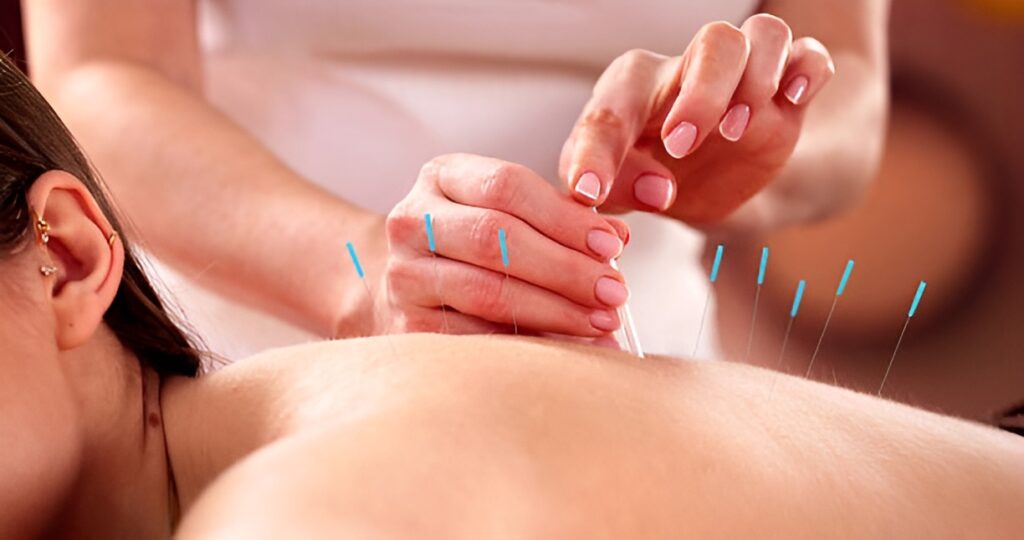
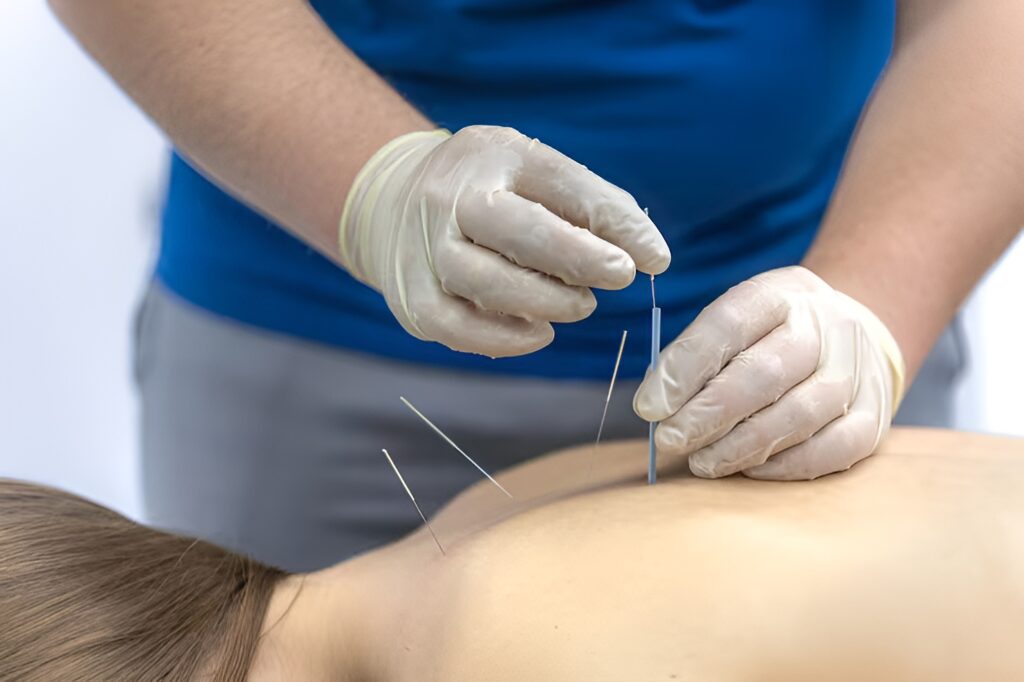
Dry needling is a highly targeted, evidence-based technique where thin filiform needles are inserted directly into active myofascial trigger points — hyperirritable taut bands within muscle that produce both local and referred pain. Guided entirely by anatomical knowledge and palpation, the needle elicits a local twitch response that resets the dysfunctional motor end plate, releases the taut band, and rapidly reduces pain and muscle tension.
CONDITIONS TREATED
- Myofascial pain syndrome
- Tension headaches
- Piriformis syndrome
- Hip flexor tightness
- Calf and hamstring knots
- Trapezius tension
- Rotator cuff
TECHNIQUES & PROCESS
1. Assessment
Systematic palpation identifies active trigger points in the affected muscle groups.
2. Needle Insertion
A sterile, single-use filiform needle is inserted directly into the trigger point — no injection, no solution.
3. Local Twitch Response
A brief involuntary muscle twitch confirms accurate placement and initiates the release cascade
4. Post-needling Stretch
The released muscle is taken through a lengthening stretch to consolidate gains and restore full range of motion.
KEY BENEFITS
FREQUENTLY ASKED QUESTIONS
What does dry needling feel like?
The needle insertion itself is often barely perceptible. The key sensation is the local twitch response — a brief, involuntary muscle jump that lasts a fraction of a second and may feel like a cramp or electric twitch. Most patients describe this as surprising rather than painful. Following the twitch, many people experience an immediate sense of muscle release and relief.
Will I be sore afterwards?
A degree of post-needling soreness — similar to the ache after an intense workout — is very common for 24–48 hours after treatment. Applying a warm pack to the area, staying well hydrated, and performing gentle stretches can help ease post-treatment soreness. Most patients find the discomfort minor and well worth the relief that follows.
How quickly will I see results?
Many patients notice a significant reduction in pain and an improvement in muscle range of motion immediately after their first session — once the initial post-treatment soreness fades. For chronic trigger points, 3–6 sessions spaced 1–2 weeks apart are typically needed for lasting resolution.
Is dry needling the same as an injection?
No. Dry needling uses a solid filiform needle — there is no hollow bore, no syringe, and nothing is injected into the body. The term ‘dry’ specifically distinguishes it from ‘wet’ needling techniques that inject substances such as corticosteroids or anaesthetics. The therapeutic effect comes entirely from the mechanical stimulation of the trigger point.
Can dry needling help with headaches?
Yes — dry needling is particularly effective for tension-type and cervicogenic headaches originating from trigger points in the suboccipital, upper trapezius, sternocleidomastoid, and scalene muscles. Deactivating these points can dramatically reduce both the frequency and intensity of headache episodes, often within 2–3 sessions.